
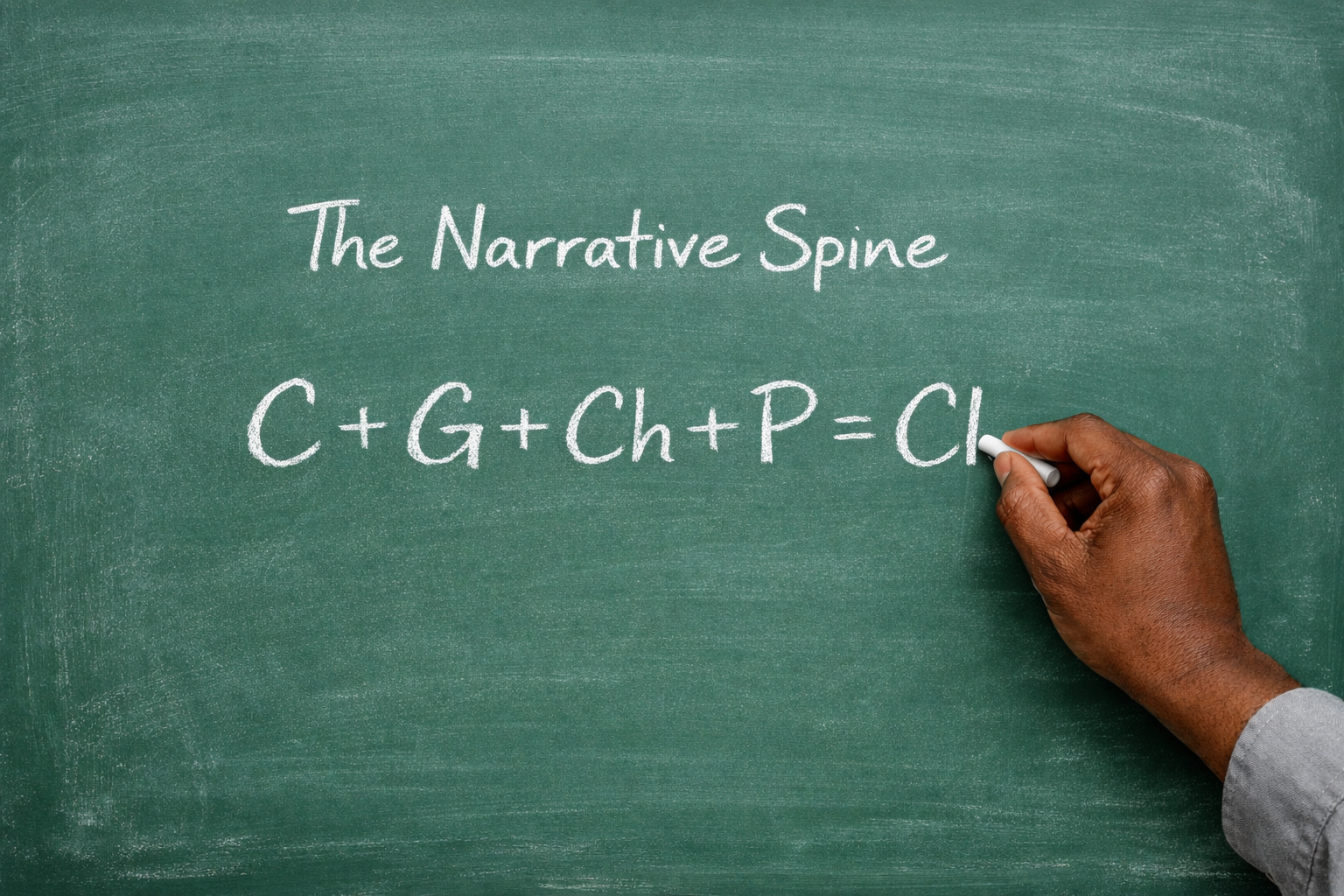
Introducing the Narrative Spine for Brand Story Clarity
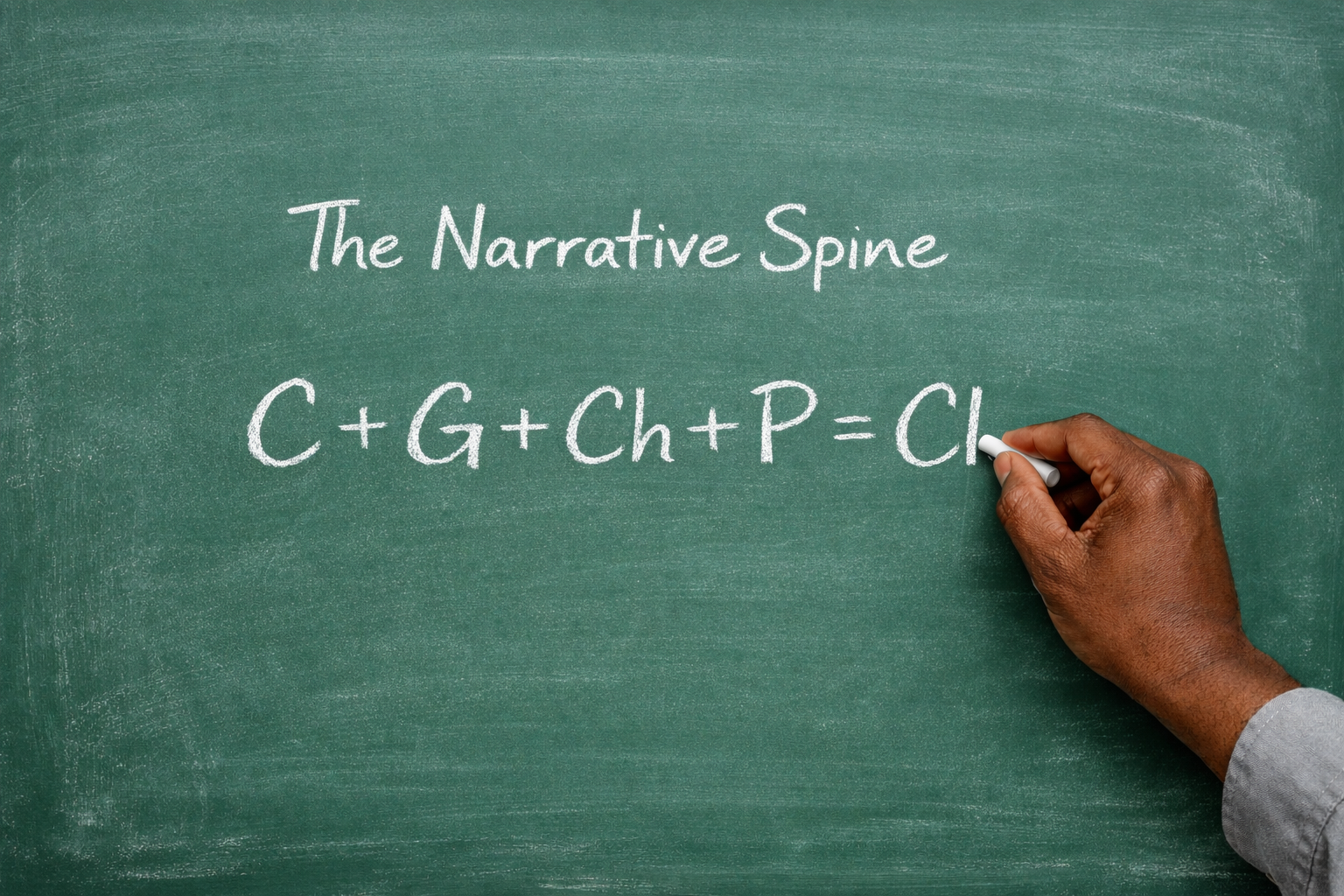
One thing many businesses still take for granted is the power of content to increase their visibility.
Let’s be honest, it’s easy to overlook because it’s free to use. Yet it’s one of those things that can feel like it demands a lot of time and resources to stay consistent. It also requires a strategy that takes time to build, as opposed to more direct marketing approaches.
Because content can feel like a slow build that pulls attention away from day-to-day operations and revenue-generating tasks, it often gets neglected.
Other options like radio and TV ads can provide faster visibility and awareness, but visibility and trust aren’t the same thing.
In a world where you’re competing on a global market, often against brands with much larger ad budgets, building trust with your audience becomes even more important.
Content matters because it builds trust through communication over time.
Think about it like a neighbour you aren’t close with but see every so often. The occasional “good morning” or “how are you doing?” without asking for anything in return can eventually lead to a conversation. And that conversation can even lead to business.
This isn’t about viewing everyone as a prospect. It’s more about giving freely, with the understanding that a percentage of people you interact with will eventually need your solution.
And when they do, familiarity makes it easier for them to choose you.
So yes, content is good.
Very good.
But what often makes content feel difficult is something much simpler:
A lack of messaging clarity.
Why Content Creation Feels Harder Than It Should Be
Many small businesses start their content journey with excitement.
But eventually something happens.
They run out of ideas.
They don’t know what to post.
Their content starts to feel random or disconnected from their brand.
So they stop.
Sometimes they return months later and try again with a trending video format or something that feels popular at the moment. While this may bring some visibility, it raises an important question:
Are you building real connections with the content you’re creating?
In many cases, the real issue isn’t creativity.
It’s clarity.
Content creation is simply the process of producing information or media designed to engage a specific audience.
But without a clear message or narrative guiding that content, the process becomes exhausting.
This is where storytelling becomes incredibly valuable.
Storytelling isn’t just an artistic skill. It’s a structure for organising ideas in a way that people naturally understand. In fact, storytelling has long been used in marketing because it helps brands communicate messages more clearly and build emotional connections with audiences.
And when brands understand how story structure works, something interesting happens.
Content becomes easier.

Photo by CoWomen: https://www.pexels.com/photo/black-video-camera-2041396/
The Content Equation: Introducing the Narrative Spine
Over time, I’ve noticed that the brands who create content consistently tend to have one thing in common.
They have clarity about the story they are telling.
And that clarity often comes from understanding a simple structure that exists in almost every story.
I call this structure the Narrative Spine.
The Narrative Spine is a storytelling equation that helps brands clarify the core narrative behind their messaging.
It identifies four essential elements that every story, and every effective brand message needs:
Character → Goal → Challenge → Path to Success
When these elements are clearly defined, brands gain the clarity they need to create meaningful content consistently.
You can think of it as a simple equation:
Character + Goal + Challenge + Path = Content Clarity
When one of these elements is missing, messaging starts to feel unclear.
And when messaging is unclear, content becomes difficult to produce.
Let’s explore why each part of the Narrative Spine matters.

Photo by Martin Lopez: https://www.pexels.com/photo/man-holding-clapper-board-1117132/
Character: Who Is the Story Really About?
Every story begins with a character.
In The Matrix, the story follows Neo.
In Titanic, we follow Jack and Rose.
In The Pursuit of Happyness, the story centers on Chris Gardner.
Stories work because we emotionally connect with the character.
But here’s something many businesses misunderstand:
You are not the main character of your primary brand story.
Your audience is.
The character in your brand story is your ideal client.
Many businesses define their audience using simple demographics such as age, location, or income. While this information can be useful, it rarely provides enough insight to guide your messaging.
Great storytelling requires understanding something deeper.
How does your audience think?
What motivates them?
What frustrates them?
What beliefs influence their decisions?
These psychological and behavioural insights help you communicate in a way that actually resonates.
Without a clearly defined character, your content risks speaking to everyone and connecting with no one.
Goal: What Does Your Character Want?
Every story revolves around a goal, and not just any goal, something that means a lot to them.
Rocky doesn’t just want to win, he wants validation that he belongs among the best.
The character’s goal drives the story forward.
Your audience also has goals.
They may want to grow their business, gain confidence, improve their skills, or create more freedom in their lives.
The key for brands is identifying the goal that directly connects to the solution they provide.
Many businesses assume they know what their audience wants. But when the assumed goal doesn’t match the audience’s real motivations, the messaging begins to feel disconnected.
Understanding your audience’s true goal ensures your content stays relevant.
And relevance is what transforms content from noise into value.
Challenge: What’s Standing in Their Way?
A story without obstacles would be boring.
Conflict is what creates tension and keeps us engaged.
In Finding Nemo, Marlin had become fearful after losing most of his family, a fear he would have to overcome if he wanted to save his only son.
The challenge forces the character to grow.
But challenges don’t only exist to make stories interesting. People experience challenges every day.
In business, the challenge represents the problem your audience is trying to solve.
Sometimes these problems are practical.
A parent might be struggling to find the right pre-school for their child. A person may be struggling with weight-loss. A business owner might struggle with inconsistent revenue.
Most challenges are tied to something psychological as well.
Fear that the child falls behind. Confusion over what is the right choice to make, overwhelm of having too many responsibilities, these can all prevent people from reaching their goals.
When brands deeply understand the challenges their audience faces, their content becomes far more relatable.
Instead of generic advice, the messaging begins to feel personal.
Path to Success: How Do You Help the Character Win?
Finally, every story reveals the path the character takes to overcome their challenge.
Morpheus helped Neo succeed by first showing him the truth about the Matrix and helping him see that the limits he believed in weren’t real. Through guidance, training, and belief in Neo’s potential, Morpheus helped him develop the skills and mindset needed to become the person capable of defeating the system.
This transformation is what makes the story satisfying.
In brand storytelling, this is where your business comes in.
The Path to Success represents how your brand helps the character achieve their goal.
This is more than just describing what you sell.
It’s about showing the journey your customer can take with you.
This journey might involve a method, a framework, a process, or a philosophy that guides your work.
When the path is clear, your content naturally becomes educational and helpful because it reveals pieces of that journey over time.

Photo by Ben Phillips: https://www.pexels.com/photo/clown-fish-on-white-corals-4781926/
Why the Narrative Spine Makes Content Easier
When the Narrative Spine is clear, content becomes much easier to create.
Instead of constantly asking yourself “What should I post today?”, you already have a narrative structure guiding your ideas.
Your content can focus on:
Helping the character understand their goal.
Exploring the challenges they face.
Shifting beliefs that hold them back.
Demonstrating the path you provide.
Each piece of content becomes a small part of a larger story.
And because the story is consistent, your messaging becomes more memorable over time.
How the Narrative Spine Fits Into a Larger Framework
The Narrative Spine isn’t meant to exist on its own.
It’s actually one component within a broader storytelling system I use called The 3 Core Brand Stories Framework.
This framework helps brands clarify three essential narratives all brands should know to connect with their audience and grow their brands.
The Narrative Spine plays a role in the first stage of this process by helping brands clarify the foundational story behind their messaging.
Once that narrative foundation is clear, creating content becomes much easier because every message stems from the same story.
The Real Secret to Consistent Content
Many people believe consistency in content creation comes from discipline.
But more often, it comes from clarity.
When you understand:
Who your character is
What they want
What stands in their way
And how you help them succeed
Your messaging becomes focused.
And when your messaging is focused, content stops feeling like a chore.
Instead, it becomes a natural extension of the story you’re helping your audience move through.
If this resonates, I share more insights on brand storytelling, clarity, and content strategy over on LinkedIn. If you want to continue the conversation click here https://www.linkedin.com/in/jason-marcano-brand-storyteller/